
Tengah Garden Residences: Floor Plans: Best Stacks, Layout Guide & What to Avoid
Unit Mix, Layout Breakdown & Stack Orientation Guide
View Tengah Garden Residences Project Page →Overview
The floor plans at Tengah Garden Residences are clearly structured for family living and upgrader use rather than investor-driven efficiency. The strongest signal is the unit mix itself: the project carries almost no 1-bedroom units, a heavy concentration of 2-bedroom and 3-bedroom layouts, and a meaningful 4-bedroom supply. This composition tells buyers immediately that this is a residential-first development.
Layouts are designed to support real daily routines, accommodate family growth, and remain practical over longer holding periods. For most buyers considering this project, the core question is not "what is the cheapest available unit?" but "which layout will still work well for my household in five to ten years?"
Key Floor Plan Facts
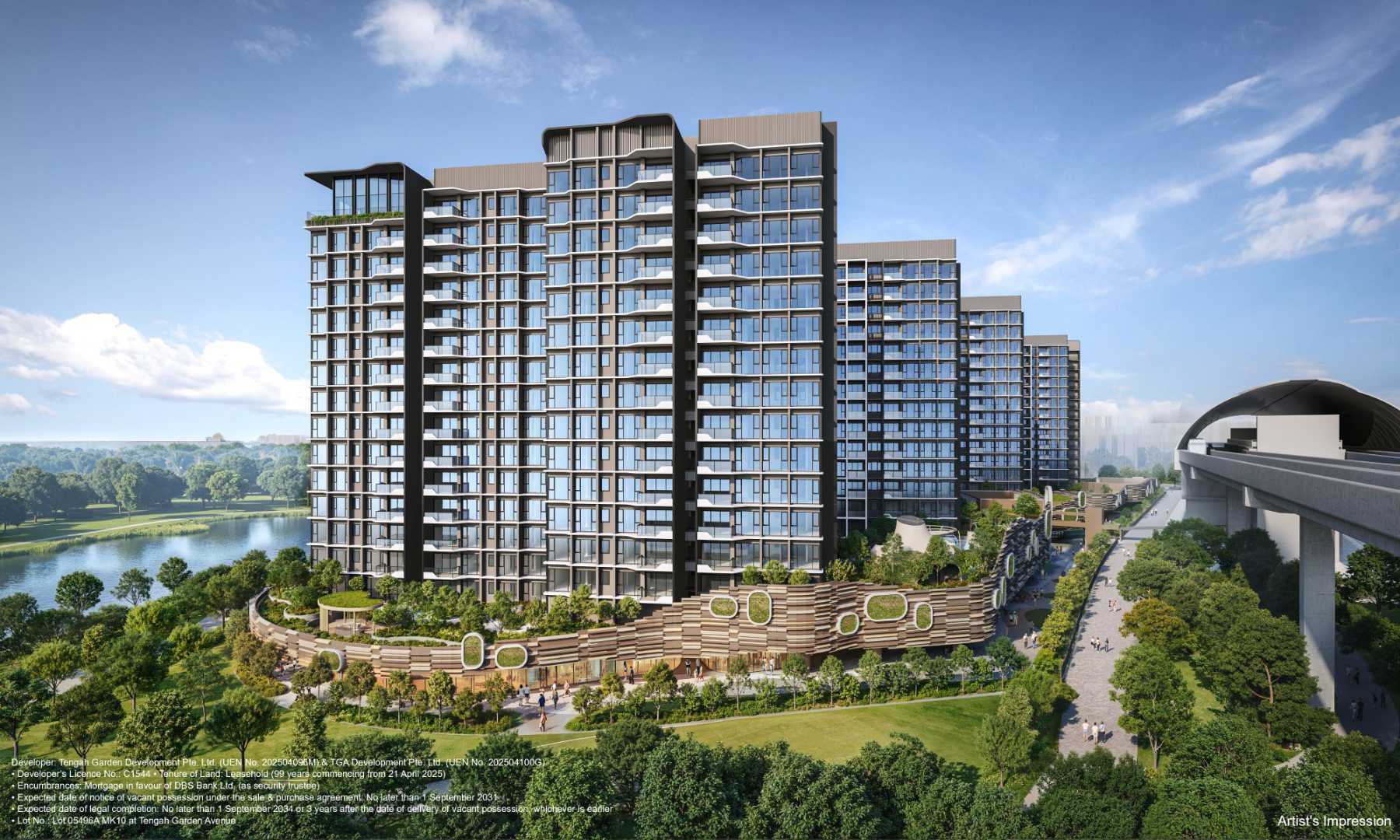
863 total residential units across 9 blocks of approximately 16 storeys
Unit types range from 1 bedroom to 4 bedroom
2-bedroom and 3-bedroom units together account for approximately 80% of the entire development
1-bedroom supply is extremely limited, reflecting a deliberate family-first positioning
Larger units include yard space, separate WC, and household shelter — features designed for genuine household use
Multiple stack orientation groups mean facing and exposure matter as much as layout
The early-stage township environment makes layout durability an especially important selection consideration
Unit Mix and Availability
Unit Type | Size Range | Total Units | % of Development | Positioning |
|---|---|---|---|---|
1 Bedroom | 484 – 517 sqft | 6 | 0.7% | Entry / Niche |
2 Bedroom | 624 – 753 sqft | 337 | 39.0% | Couples / Flexible entry |
3 Bedroom | 797 – 1,033 sqft | 347 | 40.2% | Core family segment |
4 Bedroom | 1,130 – 1,259 sqft | 173 | 20.0% | Larger family / Long hold |
Total | — | 863 | 100% | — |
What the Unit Mix Reveals
This is not a small-unit liquidity project. It is a family entry development into a new town, and the unit mix reflects that clearly.
The near-absence of 1-bedroom units means the project is not built around investor absorption or short-term rental yield. Two-bedroom units serve as the entry and flexibility segment. Three-bedroom units form the core decision segment, aligned with the broadest family buyer profile. Four-bedroom units represent a long-hold, multi-generational or larger-family commitment.
This composition aligns directly with Tengah's overall planning intent: early entry, long holding period, and gradual benefit from town maturation.
Layout Strategy: Liveability Over Efficiency
The layouts at Tengah Garden Residences prioritise usability over unit compression, family function over maximising density, and long-term comfort over short-term entry efficiency. In practical terms, these units are designed to be lived in rather than flipped. That distinction changes the way buyers should evaluate every aspect of the floor plan.
1-Bedroom Layouts
One-bedroom units at Tengah Garden Residences typically follow a corridor or linear layout, include a balcony or private enclosed space, and lack both a yard and a household shelter. The bathroom is accessed via the bedroom rather than from a common area.
These layouts function adequately, but they are not what the project is built around. With just 6 units out of 863, supply is extremely limited — and deliberately so. Buyers whose decision is primarily driven by layout strength and liveability should not focus on this segment.
2-Bedroom Layouts
Two-bedroom units are the project's most flexible offering. They typically feature compact or corridor-style layouts with a balcony or private enclosed space, an open kitchen arrangement, and in some configurations, two bathrooms rather than one.
This segment suits couples, first-time private property buyers, and buyers seeking a lower quantum entry point with the intention of holding long term. However, the distinction between a 2-bedroom unit with two bathrooms versus one bathroom is meaningful — it affects resale appeal, day-to-day usability when hosting guests or family, and long-term flexibility as household needs evolve.
3-Bedroom Layouts
The 3-bedroom segment is the core of the development, accounting for over 40% of all units. These layouts offer proper zoning between living and bedroom areas, a balcony, yard space with a separate WC, a household shelter, and an internal corridor separating communal and private zones.
For most buyers considering Tengah Garden Residences, this is the segment that offers the strongest balance of real family usability, long-term flexibility, and resale positioning. The 3-bedroom layouts are designed for households who genuinely intend to live in the unit over an extended period, and they reflect the project's overall positioning as a family-first development entering a new town.
4-Bedroom Layouts
Four-bedroom units provide larger living and dining areas, a yard with separate WC and household shelter, longer internal corridors for better privacy separation, and a more complete household structure overall. These units offer strong multi-generational flexibility and are well-suited to larger families planning extended occupation.
The trade-off is quantum. At this price tier, buyers are no longer comparing Tengah Garden Residences only against itself — they are weighing it against other family-sized projects across the West region and beyond. The value of a 4-bedroom unit here must come from genuine, long-term household use rather than from size alone.
Stack Orientation Groups
There is no universally "best" stack at Tengah Garden Residences. The right choice depends on a buyer's specific priorities — whether that is lower heat exposure, proximity to commercial amenities, road noise tolerance, or openness of view. The following groups provide a framework for evaluating the trade-offs.
Group A — North / North-East Facing
Stacks: 01, 02, 07, 08, 13, 14, 19, 20, 21, 22, 26, 27
These stacks benefit from lower direct heat exposure and a more defensively oriented position within the development. The main considerations are potential road exposure and the impact of future neighbouring developments on views and privacy. This orientation feels stable in the near term, but its long-term appeal depends on what gets built around it.
Group B — South / South-West Facing
Stacks: 04, 05, 10, 11, 16, 17, 24, 25
South and south-west facing stacks offer closer proximity to Plantation Plaza and greater daily convenience for residents. The key trade-offs are stronger afternoon sun exposure and greater ambient noise from traffic and commercial activity. This is fundamentally a convenience versus comfort trade-off.
Group C — East / South-East Facing
Stacks: 31, 32, 33, 40, 41, 48, 49
East and south-east facing stacks offer a more balanced exposure overall, with moderate openness and relatively neutral heat conditions. Buyers considering these stacks should be aware of potential future medical or institutional developments in the vicinity, as well as road exposure on certain sides.
Group D — West / North-West Facing
Stacks: 03, 06, 09, 12, 15
West-facing stacks have the potential for greenery-facing views and a more open feel in the near term. The most significant trade-off is direct afternoon and evening sun exposure, which can meaningfully affect indoor comfort and air conditioning costs. Future development risk on the western side is also a consideration.
How to Choose the Right Unit
Most buyers narrow their shortlist using a combination of five factors:
Budget: A lower entry price is of limited value if the layout does not support long-term household use. Total quantum should be evaluated alongside layout quality rather than in isolation.
Household size: The difference between a 2-bedroom and a 3-bedroom unit is not simply one additional room. It represents a different daily lifestyle, different zoning of space, and different long-term flexibility as household needs change.
Holding period: Buyers planning a shorter hold tend to be better served by 2-bedroom units with broader buyer appeal. Those planning longer hold periods of seven years or more are generally better aligned with 3-bedroom or 4-bedroom layouts.
Facing tolerance: Sun exposure, road noise, and proximity to future development plots are real and daily considerations. Each orientation group involves trade-offs, and buyers should select based on which trade-offs they are most comfortable accepting.
Lifestyle priority: Buyers must identify whether their priority is daily convenience, relative quiet, openness of view, or proximity to facilities — as these priorities map differently across the site's stack groups.
The right unit is the one that a buyer will not regret living in five or ten years from the point of purchase.
Conclusion
Tengah Garden Residences is a project where layout quality matters more than entry price, where 3-bedroom units form the core decision segment for most buyers, and where stack selection meaningfully changes the day-to-day living experience. Across the unit types: 1-bedroom units occupy a niche position, 2-bedroom units offer a flexible entry point, 3-bedroom units represent the strongest overall balance, and 4-bedroom units serve long-term family use.
Selecting the right unit at Tengah Garden Residences is not about finding the cheapest available option. It is about identifying a layout and stack combination that will remain genuinely suited to a buyer's household over the full holding period.
Frequently Asked Questions
Are the floor plans at Tengah Garden Residences efficient?
They are efficient for living rather than for unit compression. The layouts prioritise usable space, day-to-day flow, and household functionality rather than fitting maximum units into minimum area. This makes them more suitable for own-stay buyers than for investors seeking high-yield, low-maintenance units.
Which layout is best for own-stay buyers?
For most buyers, the 3-bedroom layouts offer the strongest balance between liveable space and total quantum. They align closely with the project's overall family-first positioning and offer better long-term usability than 2-bedroom layouts for growing households. The right choice still depends on specific household size and plans.
Are 2-bedroom units sufficient for long-term living?
They can be, but primarily for smaller households. Two-bedroom units offer flexibility and lower quantum entry, but may feel limiting as household needs expand over time. Buyers planning for family growth should consider carefully whether the layout will meet their needs beyond the first few years.
Does stack selection matter significantly?
Yes, significantly. Different stack groups face roads, greenery, future development plots, or commercial areas. This affects daily exposure to noise, heat, privacy, and long-term views. Layout quality alone is not sufficient — stack selection matters equally and should be considered part of the same decision.
Are 4-bedroom units worth the higher price?
They are, for households that genuinely need the space. Four-bedroom units provide better privacy separation, greater multi-generational flexibility, and stronger long-term usability. However, the higher quantum means buyers are comparing Tengah Garden Residences more directly with other family-sized projects. The value must come from real, planned usage rather than perceived size advantage.
Is this project more suitable for investors or own-stay buyers?
This is clearly an own-stay development. The unit mix is heavily weighted toward family-sized layouts, with minimal small-unit supply. It is designed for buyers who intend to live in the property over an extended period, and the layout strategy reflects that intent throughout.
Interested in Tengah Garden Residences?
Get the latest pricing and stack recommendations from a verified consultant — no obligation.