
Pinery Residences: Price Guide: PSF Breakdown & Value Assessment (2026)
Pricing Structure, Entry Levels and Tampines Market Context (District 18)
View Pinery Residences Project Page →Overview
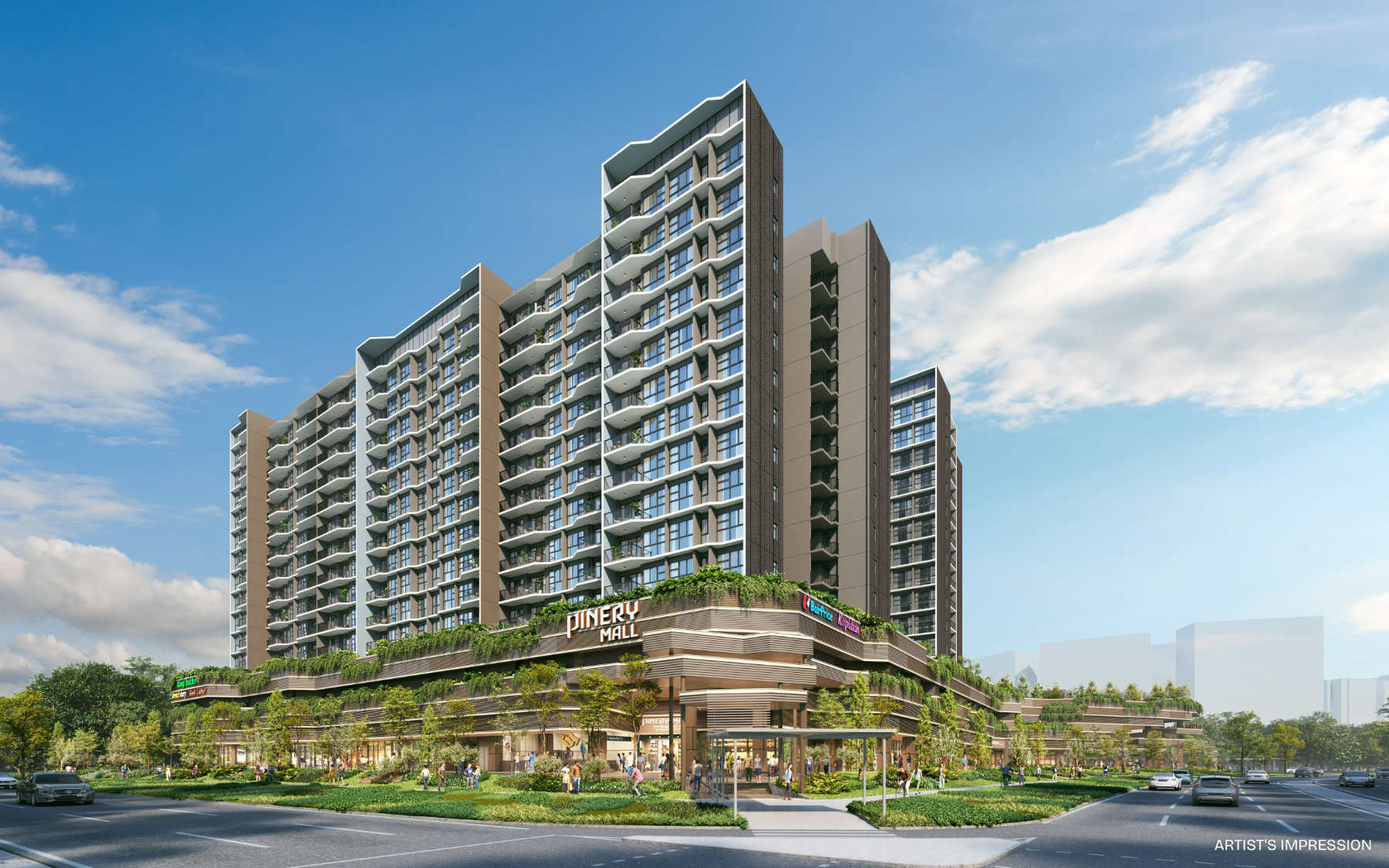
Pinery Residences is positioned as a premium integrated OCR development in Tampines, where pricing is shaped primarily by MRT integration, land cost, and upgrader affordability rather than scarcity or lifestyle branding. Unlike boutique or prestige projects where PSF commands the conversation, pricing here must ultimately pass the test of absolute quantum affordability for family buyers upgrading within the eastern corridor.
The GLS land cost of approximately $1,004 psf per plot ratio sets a structural pricing floor but does not guarantee buyer acceptance. The relevant question for each buyer segment is not whether the pricing reflects development costs, but whether the total quantum — particularly for 3 and 4-bedroom units — remains within a range that feels rational given the available alternatives, including Executive Condominiums and non-integrated resale condominiums in Tampines.
Key Facts
Detail | Information |
|---|---|
Tenure | 99-year leasehold |
Location | Tampines Street 94, District 18 |
MRT | Tampines West MRT (DT31), Downtown Line — direct underground access |
Unit Types | 2 Bedroom to 5 Bedroom |
Size Range | 624 to 1,475 sqft |
Developer | Hoi Hup Realty and Sunway Developments |
Expected TOP | April 2030 |
Positioning | Integrated MRT-linked family development |
Best Suited For | HDB upgraders, families, long-horizon own-stay buyers |
How Pricing Is Structured at Pinery Residences
Pricing at Pinery Residences varies across unit types, configurations, stack orientation, and floor level. Within the same unit type, two units can sit in meaningfully different price tiers depending on whether they face quieter landscaping or road-adjacent areas, their elevation within the block, and their proximity to the commercial podium.
This means entry price alone is an insufficient evaluation tool. Buyers should assess total quantum at the specific stack, level, and configuration they are considering, not rely on headline pricing as a universal reference.
The pricing structure reflects three main factors. The first is the integration premium attached to direct MRT connectivity and on-site retail infrastructure. The second is the elevated land cost from the GLS tender, which structures the developer's pricing floor. The third is the upgrader affordability ceiling of the target buyer segment, which constrains how far pricing can extend before comparison pressure with Executive Condominiums becomes too strong to ignore.
Price Tiers by Unit Type
Unit Type | Size Range | Typical Buyer | Price Positioning |
|---|---|---|---|
2 Bedroom | 624 to 667 sqft | Couples, entry investors | Entry level |
2 Bedroom + Study | 700 sqft | Smaller households, WFH buyers | Compact upgrader tier |
3 Bedroom | 807 to 1,023 sqft | Core family buyers | Family tier |
3 Bedroom + Study | 1,055 sqft | Families with WFH needs | Larger family tier |
4 Bedroom | 1,141 sqft | Established larger families | Premium family tier |
4 Bedroom + Study | 1,195 to 1,389 sqft | Multi-generational households | Upper family tier |
5 Bedroom | 1,475 sqft | Large households | Niche / limited supply |
The absence of 1-bedroom units is a deliberate signal. Pinery Residences is not structured for investor-driven compact demand or short-term rental strategies. The starting point is the 2-bedroom, and the bulk of supply sits in the 3 and 4-bedroom tiers that serve the development's core upgrader family profile.
Absolute Quantum vs PSF
For family-oriented OCR developments like Pinery Residences, total quantum is more useful as a decision metric than PSF. Several reasons support this.
Family buyers are predominantly own-stay households whose decisions are driven by monthly mortgage sustainability and CPF planning rather than per-square-foot comparisons. Larger units amplify the quantum impact of any PSF difference meaningfully. A $100 psf variance across a 1,000 sqft unit represents $100,000 in total price, which directly affects financing headroom and future resale accessibility. Exit liquidity depends on whether the next generation of family buyers can access the unit at a manageable quantum, making entry pricing discipline compounding in its importance.
Buyers should model total quantum against their financing parameters and apply a stress test at a mortgage rate one to two percentage points above the current prevailing rate. The goal is to confirm that the commitment remains comfortable under less favourable conditions, not merely at the point of purchase.
The Integration Premium: What Buyers Are Actually Paying For
The pricing premium at Pinery Residences relative to non-integrated OCR developments reflects several structural attributes. Direct underground sheltered access to Tampines West MRT eliminates weather exposure and reduces commute friction daily. An on-site supermarket, food court, and childcare facilities reduce the need for additional daily travel. The combined effect is a measurable improvement in daily efficiency that compounds over a long holding period.
Whether this premium is justified depends on how much a specific household values those daily conveniences. Buyers who walk to the MRT from a surface-level condo nearby may find the gap hard to justify. Buyers managing school runs, working full days, and running household errands in the evenings will feel the difference meaningfully.
The integration premium also carries a resale implication. Integrated developments in mature regional centres tend to maintain demand stability better than equivalent non-integrated projects during softer market cycles, because the convenience infrastructure they provide does not age or depreciate in the way that aesthetic features do.
Comparison With Nearby Projects
Development | Type | Key Distinction |
|---|---|---|
Rivelle Tampines | Executive Condominium | Lower entry price, MOP restrictions, income ceiling |
Parktown Residences | Integrated development | Older benchmark, different MRT node |
Treasure at Tampines | Large-scale OCR | Non-integrated, lower PSF, broader unit mix |
The Alps Residences | OCR condominium | Smaller scale, no integration, quieter environment |
The most consequential comparison is against Rivelle Tampines. Both projects target similar upgrader families within the same planning area and school catchments. The decision between them ultimately depends on income eligibility, tolerance for the EC Minimum Occupation Period, and how much each buyer values immediate private status and rental flexibility versus the EC entry price advantage.
For buyers who exceed the EC income ceiling, Pinery Residences is effectively the primary option for MRT-integrated family living within Tampines. For buyers within the ceiling, the comparison is a genuine financial trade-off that deserves careful modelling rather than a quick instinctive decision.
Who the Pricing Suits
Pinery Residences pricing works best for HDB upgrader families who have clear long-term own-stay plans and are upgrading from Tampines or Bedok estates where the surrounding environment and school network are already familiar. It suits buyers who assign genuine daily value to MRT integration and on-site convenience, and who plan to hold the asset for seven to twelve years or longer.
It is less well-suited to buyers whose primary filter is the lowest available entry quantum in Tampines, those who view integration as a minor or irrelevant factor, buyers planning to exit within five years, and investors focused primarily on yield rather than capital preservation through steady demand.
Pricing Phases and Structure
Pricing at new launch developments is typically structured across phases rather than through explicit headline discounts. What is sometimes described as promotional pricing generally reflects differences in unit positioning, release timing, and phase sequencing rather than direct reductions. At Pinery Residences, any pricing advantages are linked to unit availability, stack choice, and the phase in which the unit falls rather than to advertised discounts.
Buyers evaluating remaining inventory should focus on whether specific available units — across their preferred configuration, stack orientation, and floor level — represent a coherent long-term purchase rather than whether the pricing compares favourably to a headline launch figure.
Final Thoughts
Pinery Residences pricing is built around integration value and upgrader affordability rather than scarcity or prestige. It makes the most sense when evaluated through total quantum comfort, long-term holding intent, and a clear household need for daily MRT convenience. For buyers whose lifestyle genuinely benefits from integrated living, the pricing premium is real but defensible. For buyers whose decision is primarily driven by finding the lowest entry point in Tampines, other options in the market will be more appropriate.
Frequently Asked Questions
Why is Pinery Residences priced higher than some non-integrated OCR projects nearby?
The pricing reflects the GLS land cost and the integration infrastructure including the MRT link, commercial podium, and sheltered connection. Buyers are paying for structural daily convenience rather than for location prestige or scarcity. Whether the premium is justified depends on how much the household values MRT access and on-site amenities relative to the alternatives.
Is the integration premium worth paying for families?
For households managing daily commutes, school routines, and errands simultaneously, the underground MRT connection and on-site groceries and food genuinely reduce friction across hundreds of days per year. Over a seven to twelve year holding period, the cumulative convenience effect is substantial. For households with more flexible schedules or where car ownership reduces transport dependence, the premium is harder to justify.
How should buyers compare Pinery Residences with Rivelle Tampines?
The comparison should be framed around eligibility, holding intent, and lifestyle priorities rather than price alone. Rivelle Tampines offers a lower entry quantum with the EC framework. Pinery Residences offers immediate private status, no MOP, rental flexibility from day one, and direct MRT integration. Buyers within the EC income ceiling should model both scenarios carefully before deciding.
What is the biggest pricing risk at Pinery Residences?
Overpaying relative to realistic affordability, particularly for 4-bedroom and larger units. In a market where EC alternatives exist at lower quantum, any pricing that feels stretched will face comparison pressure at resale. Entry pricing discipline is more important here than at a supply-constrained boutique project.
Do larger units hold their value well at resale?
Three-bedroom units will see the broadest resale demand aligned with the same upgrader demographic that drives initial absorption. Four-bedroom configurations are well-suited for own-stay use but will face a narrower resale buyer pool at higher quantum levels, making entry pricing discipline particularly consequential for these buyers.
Is yield a viable return strategy at Pinery Residences?
As a supplementary consideration, yes. Rental demand from Changi Business Park professionals and families seeking Tampines school catchments provides a functional tenant base. As a primary return strategy, no. The investment case rests on stable own-stay demand and long-term capital preservation rather than yield compression or short-term appreciation.
Interested in Pinery Residences?
Get the latest pricing and stack recommendations from a verified consultant — no obligation.