
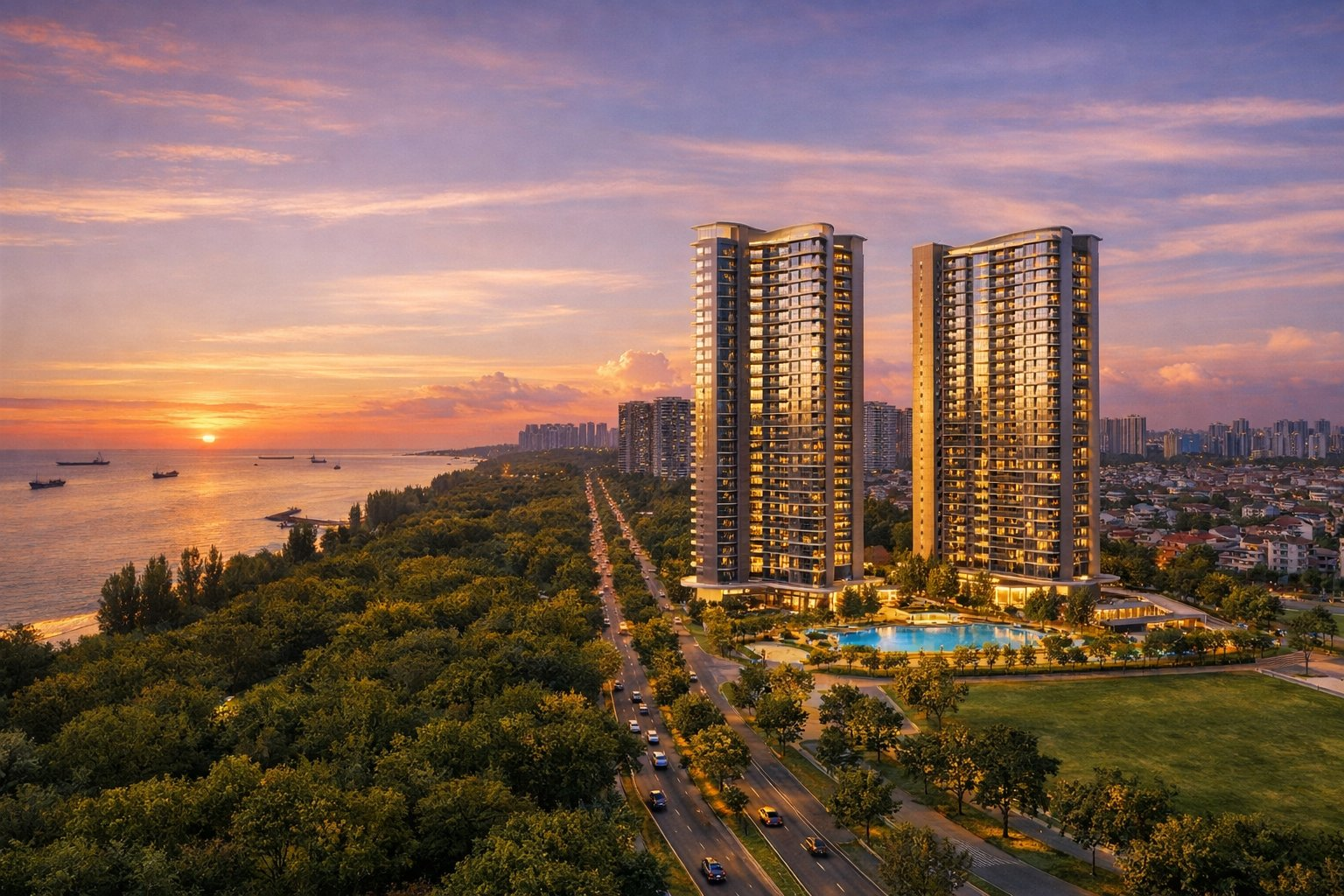
Vela Bay: Price Guide: PSF Breakdown & Value Assessment (2026)
Pricing, PSF and Available Units (Bayshore / District 16)
View Vela Bay Project Page →Overview
Vela Bay is priced at the upper tier of the Outside Central Region (OCR) market, reflecting its MRT adjacency, coastal positioning, and role as the first private launch within the Bayshore precinct. Entry pricing begins from approximately $1.291 million for a 1 Bedroom unit, with the full range extending to $5.65 million for the penthouse.
Rather than evaluating headline entry prices alone, buyers typically assess Vela Bay by comparing how different unit types, layouts, and stack positions sit relative to one another within the overall pricing structure. Pricing across the project varies based on size, facing, floor level, and configuration, which means two units of the same type can carry meaningfully different price points depending on their position in the building.
With approximately 72% of units sold during the preview phase, the decision at this stage is no longer a broad comparison across the full unit mix. It is a unit-specific evaluation of whether the remaining options align with a buyer's budget, layout needs, and long-term plans.
Key Facts
Detail | Information |
|---|---|
Tenure | 99-year leasehold |
Location | Bayshore Road, District 16 |
MRT | Bayshore MRT (TE29), Thomson-East Coast Line |
Unit Types | 1 Bedroom + Study to 5 Bedroom + Private Lift, and Penthouse |
Entry Price | From approximately $1.291 million |
Price Range | Approximately $1.29 million to $5.65 million |
PSF Range | Approximately $2,500 to $3,200+ psf |
Positioning | Coastal, MRT-integrated premium OCR development |
Best Suited For | East-side upgraders, own-stay families, long-horizon buyers |
Pricing and Available Units
The table below reflects the latest pricing ranges and remaining inventory across unit types, based on the most recent available information.
Type | Size (sqft) | PSF Range | Price Range | Units Remaining |
|---|---|---|---|---|
1 Bedroom + Study | 495 | $2,608 – $2,628 | $1,291,000 – $1,301,000 | 8 of 27 |
2 Bedroom | 592 | $2,574 – $2,846 | $1,524,000 – $1,685,000 | 8 of 84 |
2 Bedroom Premium | 678 – 689 | $2,702 – $2,984 | $1,862,000 – $2,056,000 | 10 of 113 |
3 Bedroom | 883 – 893 | $2,553 – $2,985 | $2,280,000 – $2,636,000 | 11 of 87 |
3 Bedroom Premium | 1,033 | $2,701 – $2,950 | $2,790,000 – $3,047,000 | 35 of 88 |
4 Bedroom | 1,173 | $2,681 – $3,039 | $3,145,000 – $3,565,000 | 34 of 62 |
4 Bedroom (Private Lift) | 1,378 | $2,745 – $3,119 | $3,782,000 – $4,298,000 | 16 of 26 |
5 Bedroom (Private Lift) | 1,582 | $2,829 – $3,198 | $4,476,000 – $5,060,000 | 20 of 26 |
Penthouse | 1,765 | $3,200 | $5,650,000 | 1 of 2 |
The pricing structure positions Vela Bay alongside other MRT-integrated OCR launches and early-stage transformation district projects rather than established mature estates. Buyers are largely evaluating long-term upside from the Bayshore transformation alongside MRT-led convenience, rather than making a straightforward affordability comparison.
How to Interpret Vela Bay Pricing
Vela Bay pricing is shaped by three factors that go beyond location alone. The first is its role as an early benchmark within the Bayshore transformation. Initial pricing at the precinct's first private launch can influence how subsequent developments in the area are positioned, which creates a degree of structural pricing support over time.
The second factor is MRT connectivity. Doorstep access to Bayshore MRT is rare in the East Coast area, and it commands a premium that is not immediately visible in PSF comparisons with older, bus-dependent East Coast projects.
The third factor is first-mover timing. Buyers entering before the precinct is fully formed are accepting a degree of execution risk in exchange for early positioning at a lower land cost base than future GLS sites are likely to carry.
The pricing works best when viewed as a forward-looking decision, where value is tied to what the Bayshore precinct is being built toward rather than what currently surrounds the site.
Comparable Projects in the East Region
Project | District | Positioning |
|---|---|---|
Sky Eden @ Bedok | D16 | Earlier MRT-integrated OCR benchmark |
Sceneca Residence | D16 | Integrated development with strong accessibility |
Bagnall Haus | D16 | Freehold boutique positioning in the East Coast area |
Pinery Residences | D18 | Newer OCR launch with higher entry positioning |
Buyers comparing Vela Bay against these projects are typically not making a decision based on price alone. The more relevant considerations are MRT connectivity and commute quality, coastal proximity and lifestyle factors, entry timing within a developing versus established environment, and long-term positioning relative to current conditions.
Vela Bay sits toward the upper end of OCR pricing, which reflects its coastal location and first-mover status within the Bayshore corridor. Buyers should assess whether that premium is justified by their own holding horizon and intended use.
Price Tiers by Unit Type
Unit Type | Size Range | Entry Price | Typical Buyer |
|---|---|---|---|
1 Bedroom + Study | 484 sqft | From ~$1.29M | Investors / Singles |
2 Bedroom | 592 sqft | From ~$1.52M | Couples |
3 Bedroom | 883 – 1,033 sqft | From ~$2.28M | Families |
4 Bedroom | 1,173 – 1,378 sqft | From ~$3.15M | Upgraders |
5 Bedroom + Private Lift | 1,582 sqft | From ~$4.48M | Larger families / multi-generational |
Penthouse | 1,765 sqft | From ~$5.65M | Ultra-high quantum / niche buyers |
Unit Types and Buyer Direction
1 Bedroom + Study units are primarily relevant for investors and entry-level buyers seeking the lowest quantum. MRT accessibility and rental potential are the main draws, though overall supply within this type is limited relative to the family-focused segments.
2 Bedroom units appeal to both investors and own-stay couples, balancing affordability with usable space. Buyers in this segment tend to focus on total quantum and layout efficiency rather than PSF alone.
3 Bedroom units represent the core family segment. Demand comes mainly from owner-occupiers and upgraders who want MRT access and East Coast lifestyle proximity. These units sit at the intersection of affordability and family functionality.
4 Bedroom units target higher-quantum buyers who prioritise space, privacy, and long-term own-stay comfort. Decisions at this level are driven by layout quality and stack positioning rather than entry pricing sensitivity.
5 Bedroom units with private lift serve larger or multi-generational households seeking a more exclusive living format. Demand is specific and limited but comes from buyers with clearly defined space requirements.
Penthouse units are niche by nature given their limited supply of just two units. Buyers at this level are less price-sensitive and more motivated by exclusivity and maximum living space.
Who Vela Bay Pricing Suits Best
Buyers who tend to find Vela Bay's pricing well-aligned are those comfortable entering a developing precinct ahead of full maturity, who prioritise long-term transformation potential over current amenities, and who understand how early launches set pricing expectations for subsequent releases.
More specifically, the pricing structure suits long-term owner-occupiers on the East side, buyers who are planning ahead for precinct growth over a seven to twelve year horizon, and investors targeting early positioning before future land parcels are priced at higher benchmarks.
It is less suited to buyers seeking immediate neighbourhood maturity, short-term investors, or those whose evaluation is based primarily on current surrounding comparables.
Affordability as a Timing Decision
At Vela Bay, affordability is as much a question of timing as it is of financial capacity. The more relevant question for buyers is not simply whether the unit is within budget, but whether they are comfortable committing to a precinct that has not yet fully materialised. Buyers who answer yes are making an early positioning decision. Those who are not yet comfortable may find it more sensible to wait for later Bayshore releases, accepting a likely higher price point in exchange for greater precinct maturity.
Pricing, Phases, and Promotions
New launch pricing is typically structured across release phases rather than through direct headline discounts. What is sometimes described as promotional pricing generally reflects differences in unit selection, release timing, and inventory positioning rather than explicit reductions. Any pricing advantages at Vela Bay are therefore linked to unit availability and choice, particularly at a stage when the majority of units have already been sold.
Final Thoughts
Vela Bay is best understood as an early benchmark within a transforming precinct, where its pricing reflects forward-looking value rather than current conditions. The logic holds for buyers who are comfortable entering before the area is fully established and who plan to hold long enough to benefit from the Bayshore corridor maturing around them. For buyers who need immediate maturity or are focused on comparable pricing within today's established East region estates, other options will be more appropriate. The core question is not whether Vela Bay is priced fairly in absolute terms, but whether the buyer's holding horizon and expectations are aligned with where the precinct is heading.
Frequently Asked Questions
Why is Vela Bay priced higher than other OCR projects?
The pricing reflects MRT adjacency, coastal positioning, and first-mover status within the Bayshore precinct. Buyers are pricing in long-term transformation potential rather than current surroundings. This differentiates it from more established OCR developments where neighbourhood maturity is already visible.
What affects pricing differences between units at Vela Bay?
Stack orientation, floor level, facing, and layout configuration are the primary drivers. Units with better views, greater openness, or higher floors typically command a premium. A higher PSF unit is not automatically a better fit for every buyer. The more useful comparison is between price and long-term usability, exposure quality, and resale audience size.
Is Vela Bay suitable as an investment?
It is more aligned with long-term investors than short-term traders. Rental demand is supported by MRT access and East Coast lifestyle appeal, but buyers should not evaluate it primarily on immediate yield. The investment case depends more on holding horizon, entry selection, and future precinct maturity than on current rental returns.
How should buyers interpret the remaining availability?
With approximately 72% of units already sold, buyers are selecting from remaining inventory rather than the full unit mix. Some layouts may be more constrained in availability. The practical question is whether the remaining units fit budget, layout needs, and long-term plans rather than what the original full range looked like.
What is the biggest pricing risk?
If entry pricing has been set above the realistic affordability threshold of East-side upgraders, resale liquidity may become more selective over time. Buyers should evaluate value at the unit level rather than relying on headline PSF or precinct branding alone.
Interested in Vela Bay?
Get the latest pricing and stack recommendations from a verified consultant — no obligation.